Why Drawing Matters for Your Child's Development
Your child's fridge-door gallery might look like random scribbles, but there's a lot more going on than meets the eye.
When kids draw, they're not just making art. They're building motor skills, learning to express emotions, developing spatial awareness, solving problems, and growing their confidence — all while having fun.
Drawing is one of the most natural and powerful activities for child development. And the best part? You don't need to teach it. Kids are born wanting to make marks on things.
Here's why those doodles matter way more than you think.
Fine Motor Skills and Hand-Eye Coordination
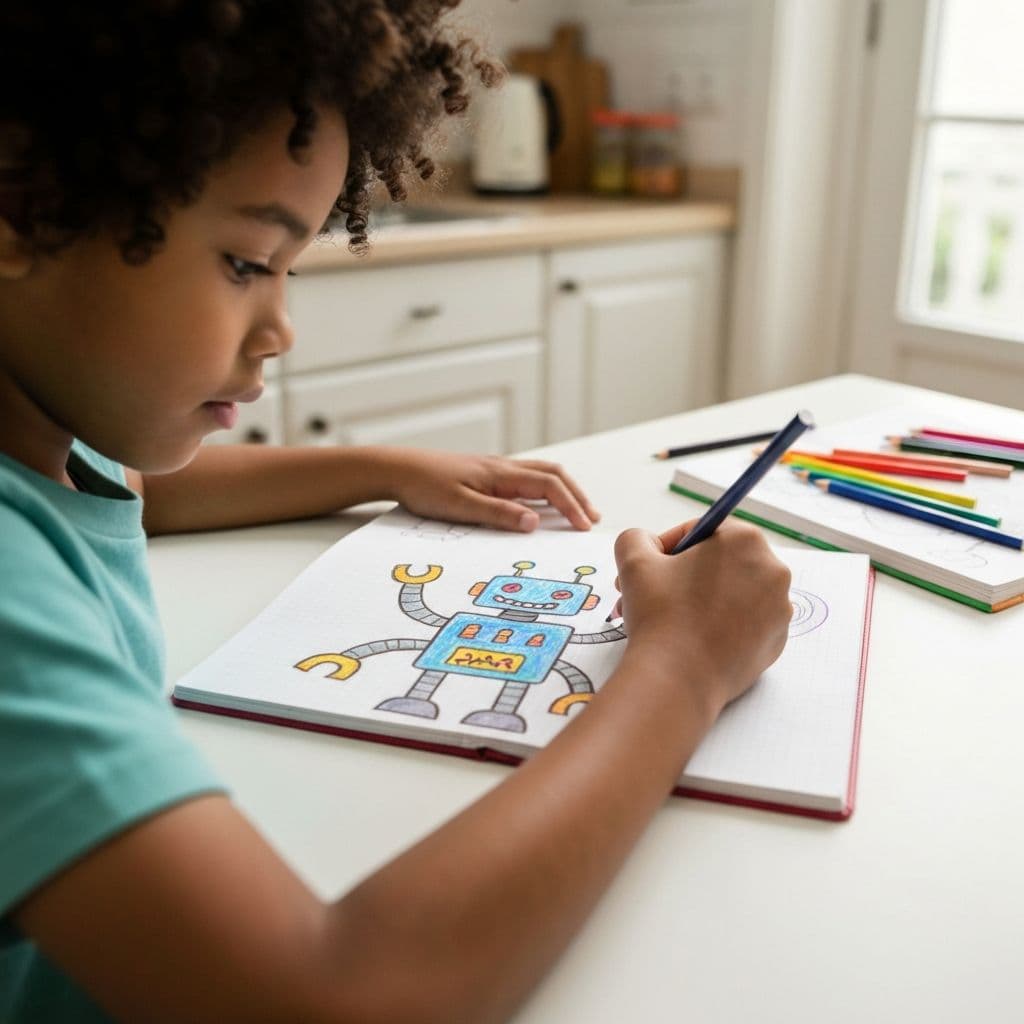
Holding a crayon, controlling its movement, and translating what's in their head onto paper — that's complex physical work for a young child.
Drawing strengthens the small muscles in the hands and fingers that kids need for:
- Writing
- Buttoning clothes
- Using scissors
- Tying shoes
- Eating with utensils
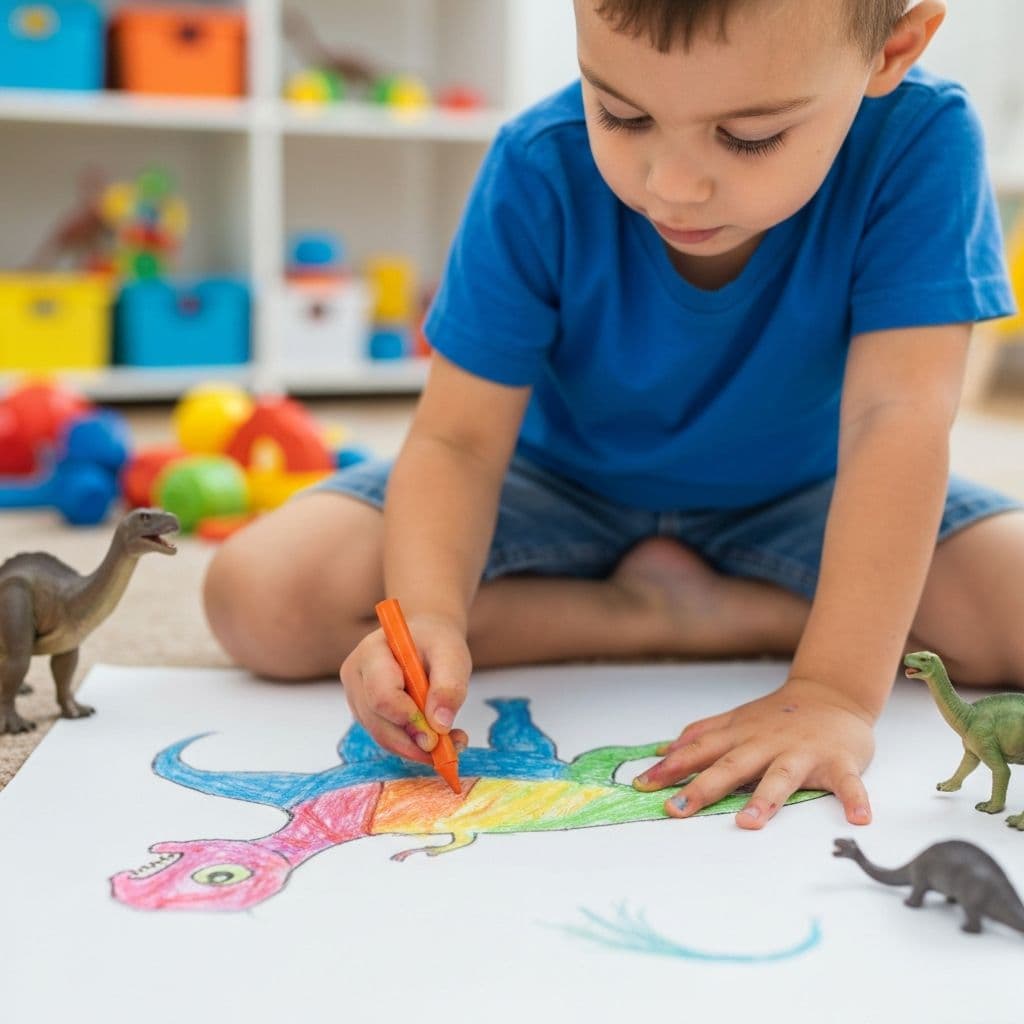
When your 3-year-old is scribbling circles with intense concentration, they're literally training their hands for everything that comes next. Those "meaningless" scribbles? They're practice for writing their name.
Emotional Expression and Processing
Kids feel big emotions but often lack the words to describe them. Drawing gives them another language.
A child who can't explain why they're upset can draw it. A child who's excited about something can show it through color and shapes. A child processing a scary experience can work through it on paper.
Child psychologists have used drawing as a therapeutic tool for decades. It works because:
- It's non-threatening — There's no "wrong" answer in a drawing
- It's self-paced — Kids can take as long as they need
- It creates distance — Drawing about a feeling is easier than talking about it directly
- It's empowering — The child is in control of the narrative
If your child draws something that seems dark or upsetting, don't panic. It's usually healthy processing. But if you're concerned, it can be a great conversation starter: "Tell me about your drawing."
Creativity and Imagination
This one seems obvious, but it goes deeper than you'd think.
When a child draws, they're not copying reality — they're inventing it. A dog can have wings. The sky can be green. People can be as tall as buildings. There are no rules, and that's the point.
This kind of unconstrained creative thinking is the same skill that later becomes:
- Problem-solving ("What if we tried it this way?")
- Innovation ("What if this thing didn't exist yet?")
- Adaptability ("This didn't work, let me try something else")
- Storytelling and communication
Research from the Education Endowment Foundation shows that creative activities in early childhood correlate with better academic outcomes later on — not just in art, but across subjects.
Confidence and Self-Esteem
When a child shows you their drawing and you say "Tell me about this!" — something powerful happens. They feel heard. They feel valued. They feel like what they create matters.
This is important: the way you respond to a child's art shapes their creative confidence for years.
Here's what helps:
- Ask questions instead of judging: "What's happening in this picture?" works better than "That's beautiful!"
- Display their art: Putting a drawing on the fridge sends the message "This is worth showing off"
- Take it seriously: When a child explains their drawing, listen like it matters (because it does)
- Never compare: "Your brother draws different" is a creativity killer
And here's where something interesting happens: when a child's drawing becomes a real, physical object — like a toy they can hold — the confidence boost is enormous. They see their own creation standing on a shelf, and the message is loud and clear: "What I imagine is real."
Cognitive Development and Problem-Solving
Drawing requires kids to make decisions constantly:
- What should I draw?
- How do I represent this thing on paper?
- What color should this be?
- This doesn't look right — how do I fix it?
Each of these micro-decisions builds cognitive skills. It's planning, executing, evaluating, and adjusting — the same process engineers, designers, and scientists use.
Younger children develop:
- Object permanence — Drawing something that isn't in front of them
- Symbolic thinking — A circle with lines is a person (that's abstract reasoning!)
- Spatial awareness — Big things go here, small things go there
- Sequential thinking — First I draw the body, then the head, then the arms
Older children develop:
- Observation skills — Drawing what they see teaches them to really look
- Planning — Deciding what to draw before starting
- Persistence — Working on a drawing until it matches their vision
Communication Skills
Before kids can write, they draw. Drawing is literally the first form of written communication.
A 2-year-old's scribble that they declare is "Mommy" is their first written message. A 4-year-old's detailed scene of a family at the beach is a complex narrative — characters, setting, activity, emotion — all communicated without words.
This progresses naturally:
- Scribbling (ages 1-3) — Exploring marks and motion
- Shapes and circles (ages 3-4) — Beginning to represent things
- Simple figures (ages 4-5) — People, animals, houses
- Detailed scenes (ages 5-7) — Stories told through pictures
- Realistic representation (ages 7+) — Drawing what they see
Each stage builds the foundation for written and verbal communication skills.
How to Encourage Drawing at Home
You don't need expensive supplies or a structured art program. Here's what actually works:
Make Supplies Available
Keep crayons, markers, and paper where your child can reach them. The easier it is to start drawing, the more often it'll happen.
Draw Together
You don't need to be good at drawing. In fact, it's better if you're not. When your child sees you drawing imperfect doodles and enjoying it, they learn that art isn't about perfection — it's about expression.
Ask About Their Drawings
"Tell me about this" is the magic phrase. It invites your child to explain their thinking, practice storytelling, and feel valued.
Don't "Fix" Their Art
If a child draws a person with three arms, that's creative, not wrong. Resist the urge to correct proportions or suggest improvements. Their art is their vision.
Make It Matter
Display drawings prominently. Send them to grandparents. Turn them into something they can keep — like a custom toy they can hold and play with. When kids see that their art has value beyond the paper it's on, they draw more.
The Takeaway
Drawing isn't a "nice to have" childhood activity — it's fundamental to healthy development. It builds the physical, emotional, cognitive, and social skills that children need to thrive.
So the next time your child hands you a drawing of a purple cat riding a skateboard through space, remember: they're not just being creative. They're growing.
And maybe — just maybe — that purple space cat deserves to become something real.
Upload your child's drawing and see what happens when imagination gets off the page.